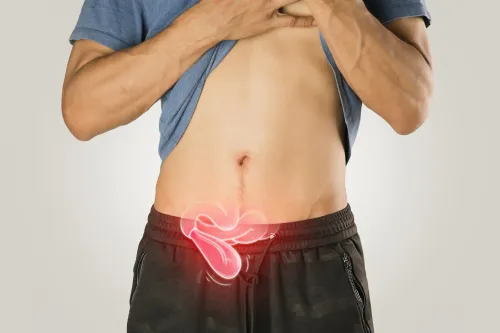
A swelling in the groin or abdominal wall that becomes more noticeable while standing, coughing, lifting, or straining may be a hernia. Some hernias cause little discomfort initially, while others gradually become painful or interfere with everyday activity.
Understanding how hernia surgery is used helps patients in Turbhe, Navi Mumbai, make better decisions instead of judging the condition only by the size of the visible bulge.
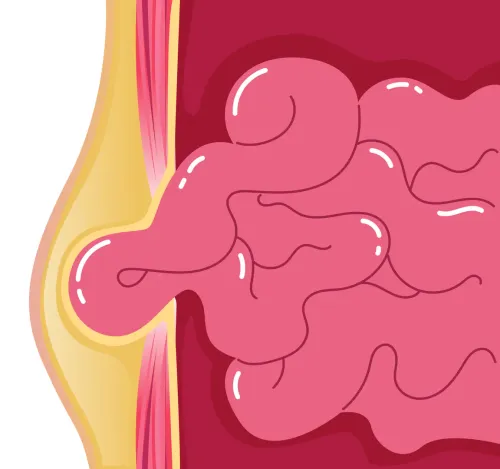
A hernia develops when tissue or an internal organ pushes through a weak area in the surrounding muscle or connective tissue. Common abdominal wall hernias include inguinal, umbilical and incisional hernias.
Symptoms That Can Occur With a Hernia
Depending on its location, a hernia may cause:
- A visible or palpable lump
- Groin or abdominal discomfort
- Heaviness or dragging sensation
- Pain during coughing or lifting
- Increasing discomfort after prolonged standing
- A bulge that becomes more prominent with physical effort
A hernia generally does not repair itself simply through medication or exercise. However, whether and when an operation should be performed depends on the type of hernia, symptoms, size, patient health and risk of complications.
Why Is Surgical Assessment Important?
A surgeon evaluates more than the external swelling. The examination helps determine the location and characteristics of the defect and whether the hernia can be reduced. Ultrasound or other imaging may be recommended when the diagnosis is uncertain or additional anatomical information is needed.
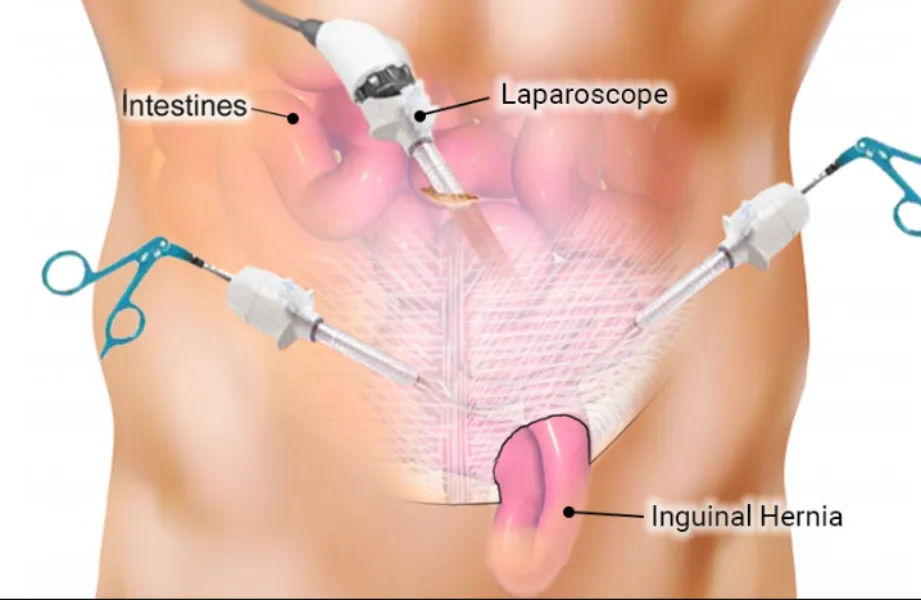
Surgical repair typically involves returning protruding tissue to the appropriate position and repairing the weakened area. Depending on the case, repair may be performed through an open or minimally invasive approach. Mesh is commonly used in many adult hernia repairs, but the appropriate technique should be selected according to individual circumstances.
When Does a Hernia Become Urgent?
A previously reducible hernia that suddenly becomes very painful or cannot be pushed back needs urgent medical attention. Other warning signs can include vomiting, increasing abdominal swelling, skin changes over the lump, or severe persistent pain.
These symptoms can indicate incarceration or strangulation, in which trapped tissue may have its blood supply compromised.
Choosing Treatment Based on the Hernia
Two patients with similar-looking swellings may not require identical procedures. Age, occupation, previous abdominal operations, recurrence, defect size, and overall health can affect surgical planning.
For people in Turbhe and surrounding parts of Maharashtra, Dr Mayur Porwal provides surgical evaluation based on the specific type and behaviour of the hernia. The useful question is not simply whether a hernia exists, but how it is affecting the patient and what repair approach is appropriate for that individual case.
Keywords